Look Closer: The Tiny Clues That Tell Priors Mill’s Restoration Story
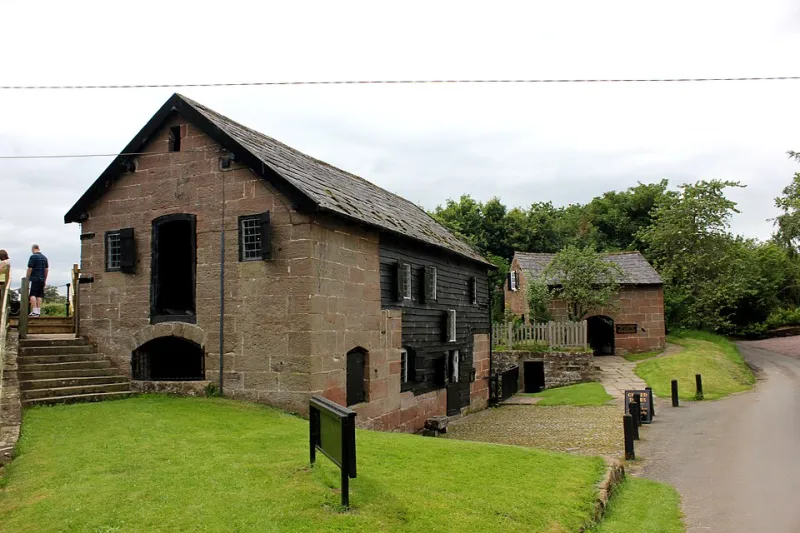
Photo: Jeff Buck , CC BY-SA 2.0, via Wikimedia Commons
Walk into Priors Mill on a wedding morning and your eye goes straight to the flowers, the table linen and the light coming through the old windows. That is exactly as it should be. But the building has another layer, one that is easy to miss when you are carrying a glass of something cold and looking for your seat. It is made up of small, repaired, worn and deliberately kept details — the kind of things the restoration team has spent years protecting rather than polishing away.
Here are five details worth slowing down for. None of them shout. All of them matter.
1. The millstones that still carry their wear
The old millstones are not tucked away in a museum case. They sit where people can see them, and on a wedding day they often become an unexpected talking point. Look closely and you will spot the furrows, the smoothed patches and the little chips that came from years of actual work. The restoration team could have resurfaced them to look neat and new. They chose not to.
That decision matters. A millstone with no wear is just a round piece of stone. A millstone with wear is a record of the people who used it, the grain that passed through it and the working life of the building. In a room full of celebration, it quietly reminds you that Priors Mill has been hosting important moments for a very long time — they just used to involve flour rather than canapés.
2. The iron tie rods holding a story together
Look up in some of the upper rooms and you will see iron rods running across the walls. To a first-time visitor they can look like something unfinished, or perhaps a piece of modern scaffolding that never went away. They are neither. They are structural repairs, added over the years to help hold the building together, and the restoration team has kept them visible on purpose.
The craftspeople involved are clear that removing every sign of repair would be dishonest. Old buildings move. They settle. They sometimes need help. The tie rods are part of that story, not an embarrassment to be covered up. During a community gathering or a wedding reception, they give a room a sense of honesty. You are not standing in a stage set. You are standing in a building that has been cared for, adjusted and kept standing by successive generations.
3. Lime mortar: the quiet hero of old walls
Most people will never notice the mortar between the bricks. That is fine. It is doing its job when it disappears into the background. But the pale, slightly crumbly-looking joints at Priors Mill are one of the most important restoration details in the whole building.
Lime mortar is soft and breathable. It allows moisture to move through the wall rather than trapping it, and it can flex gently as the building shifts. Hard cement mortar, by contrast, can look smart for a few years and then cause serious problems behind the scenes. The team has repointed carefully with lime, matching the colour and texture of the original work rather than making the walls look brand new.
So when you see a joint that is not perfectly uniform, resist the urge to think it is a flaw. It is a sign that the building is being treated with the right materials and a lot of patience. It is also why the walls feel warm and textured rather than flat and sealed. In a wedding photograph, that texture is quietly doing more work than any filter.
4. Roof trusses with carpenter’s marks
The main hall is the kind of space that makes people look up. The timber roof trusses are big, dark and full of character, and if you get close enough you may spot old carpenter’s marks — small cuts and numbers made when the frame was first assembled. They are the kind of detail you would never notice from a photograph, but they tell you something important: this roof was made by hand, by people who knew exactly how the pieces fitted together.
The restoration team cleaned and repaired the trusses rather than sandblasting them back to a false brightness. The timber still carries its age, its colour and its evidence of work. That matters for more than nostalgia. The trusses give the room its shape, its acoustic warmth and its sense of occasion. A wedding breakfast under that roof feels different from a wedding breakfast in a room with a flat white ceiling. The building is doing some of the storytelling for you.
5. The worn threshold at the old cart door
One of the smallest details is also one of the most human. At an old doorway, the stone threshold has been worn into a shallow dip by generations of feet, wheels and boots. It is not dramatic. You could walk over it a hundred times without noticing. But once you do, it is hard not to think about everyone who has crossed it before you.
The restoration team kept that threshold rather than replacing it with a crisp new slab. It is a tiny piece of the building’s memory, and it connects the mill’s working past to its present life as a place for weddings, gatherings and community events. Guests cross it on the way in without knowing they are taking part in a very long tradition. That is the thing about thresholds: they are where buildings meet people.
Why keeping the imperfections matters
The common thread in all five details is a simple conservation idea: a restored building should not pretend it was never used. The team at Priors Mill has worked hard to make the venue safe, warm and practical, but it has not tried to erase the evidence of age. The worn stone, the visible ironwork, the lime mortar and the hand-cut timber are all part of the same story.
That approach is not about being sentimental. It is about being honest. Old buildings have a biography, and the best restoration work lets you read it. It also makes Priors Mill a more interesting place to celebrate in. Couples often say they wanted somewhere with character. This is what character actually looks like up close: not a styling choice, but a layer of history that has been cared for.
How to spot them on your next visit
You do not need a guided tour to notice these details, though one is always a good idea. Arrive a little early. Look down at the thresholds. Look up at the roof. Run a hand near — not on — the old walls and notice how uneven they are. Ask a steward or a member of the team about the repairs. They will happily point out the things most people miss.
And if you are planning a wedding or a community event at Priors Mill, consider making a feature of them. A few words about the millstones, the old doorway or the roof trusses can give a speech a sense of place. The building has been here for a long time. The smallest details are often the best way to hear it.