Before the Vows: The Making of a Priors Mill Wedding Morning
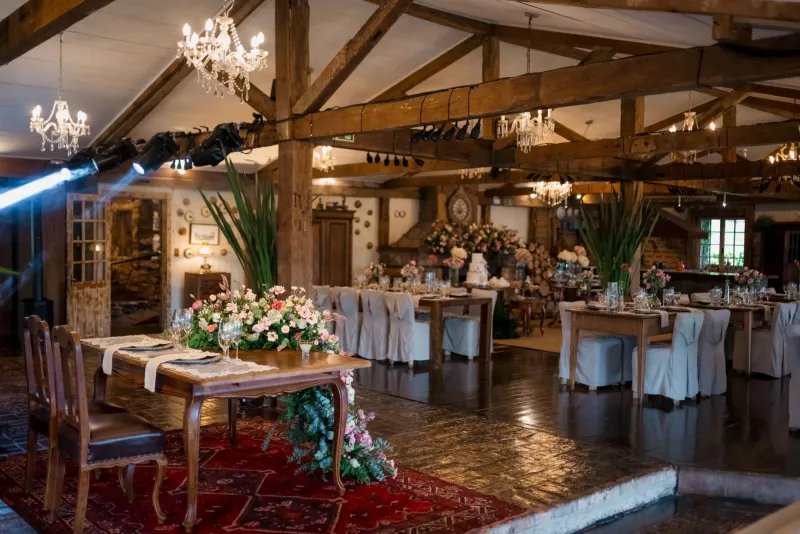
There is a moment at Priors Mill, usually just after the first kettle has boiled, when the building feels like it is holding its breath. The chairs are not yet out. The candles are still in their boxes. The courtyard cobbles are damp with morning air, and the grain floor has that particular hush that only old buildings manage. It is not empty, exactly. It is waiting.
Wedding days get the photographs, and quite rightly so. But the hours before the vows tell their own story — one of careful routines, familiar quirks and a team moving through a restored mill like people who know every creak and corner. Follow one wedding morning from first light to final candle, and you see how much warmth goes into making a historic venue feel easy.
6.40am: The First Walk-Through
The caretaker arrives before almost anyone else. Keys, torch, a mug of tea that will go cold somewhere near the community rooms. The first job is not glamorous: walk the site, look and listen. Has the rain found a new way in overnight? Are the cobbles slippery near the old doorway? Is the grain floor warm enough, or has the November chill settled into the stone?
Priors Mill is a building with opinions. A door that closes sweetly in summer can need a firm hand in damp weather. One corner of the courtyard holds water for a while after rain. The team knows these things the way you know a friend’s moods. That early round is less an inspection than a conversation.
By 7am, the wedding coordinator has joined him. Clipboard out, phone charged, a list that looks alarming until you realise most of it is ticked already. The couple’s table plan is checked against the room layout. The registrar’s arrival time is confirmed. Somewhere in the kitchen, the first crates are being unloaded.
8.15am: The Grain Floor Wakes Up
The grain floor is the heart of many Priors Mill weddings, and it takes a certain kind of patience to prepare. Chairs are set in long, gentle curves rather than rigid rows — a nod to the room’s shape and the fact that nobody wants to spend a ceremony craning round a pillar. The aisle is kept clear, then marked quietly with ribbon or chalk so the florist knows where to work.
This is the hour when the building starts to sound different. The low murmur of the team is joined by the clink of glasses and the rustle of linen. A ladder appears. Then another. The florist arrives with buckets of stems and a look of focused optimism, and the grain floor begins to soften. Suddenly it is not a restored industrial space at all. It is a room about to be filled with people.
There are always one or two details that need a mill-specific solution. A beam that will not take a hook. A socket in a slightly unexpected place. A step that needs warning guests without making it look like a hazard sign at a festival. The team has done this enough times to solve these things without fuss, which is exactly the point.
10.30am: Cobbles, Candles and the Small Stuff
Out in the courtyard, the cobbles are being swept and the doorway checked for clearance. If the couple are arriving by car, the route is walked. If confetti is being used, the likely landing spots are noted — not to spoil the fun, but to make sure the Mill looks its best for the evening too.
Inside, the smaller tasks take over. Candles are placed in their holders and left unlit for now. Signs are straightened. The community rooms are given a final once-over: enough chairs, enough warmth, enough space for grandparents and small children and anyone who needs a quiet five minutes. Priors Mill was restored to be used, not admired from a distance, and wedding mornings are when that purpose feels most visible.
By midday, the kitchen is in full swing. There is a rhythm to it — trays in, trays out, a tasting spoon passed round, someone asking whether the vegetarian option has enough gravy. The smells drift through the building and make the whole place feel lived-in in the best way.
1pm: The Community Rooms Find Their Voice
The community rooms often start the day as the quietest part of the Mill and end it as the busiest. By early afternoon, they have been rearranged for the wedding breakfast, the children’s table has been stocked with pencils and paper, and the sign for the loos has been checked at least twice.
This is also when the personal touches arrive. Photographs of grandparents, a favourite blanket for an elderly guest, a box of homemade biscuits from a neighbour who insisted. The team handles these gently. They know that a wedding at Priors Mill is not just an event in a historic building; it is a family day taking place inside a place that many people in Billingham already feel they own a little bit of.
4.45pm: The Last Candle
Late afternoon brings the loveliest job of the day. The candles are lit, one by one, along the windows and down the long tables. The grain floor is left alone for a moment, chairs in place, flowers settled, aisle waiting. The courtyard lights come on. The building seems to draw itself up.
The coordinator does a final walk-through. She checks the registrar’s table, the order of service, the box of tissues that someone always needs. The caretaker puts his keys away. The florist packs up her buckets. For a few minutes, there is nothing left to do but let the Mill be ready.
5.30pm: Doors Open
The first guests arrive in that slightly self-conscious way people do when they are early. They step through the doorway, look up at the old beams, and say something along the lines of “Isn’t this lovely?” The team smiles and points them towards the ceremony room. The quiet morning has become a wedding.
By the time the vows are spoken, the hours of preparation have disappeared into the background, which is exactly how it should be. Priors Mill has done what it does best: held a big day in a building with history, warmth and just enough character to make it memorable. The last candle is already lit. All that is left is the celebration.