After the Daylight Fades: Lighting Priors Mill Without Losing Its Character

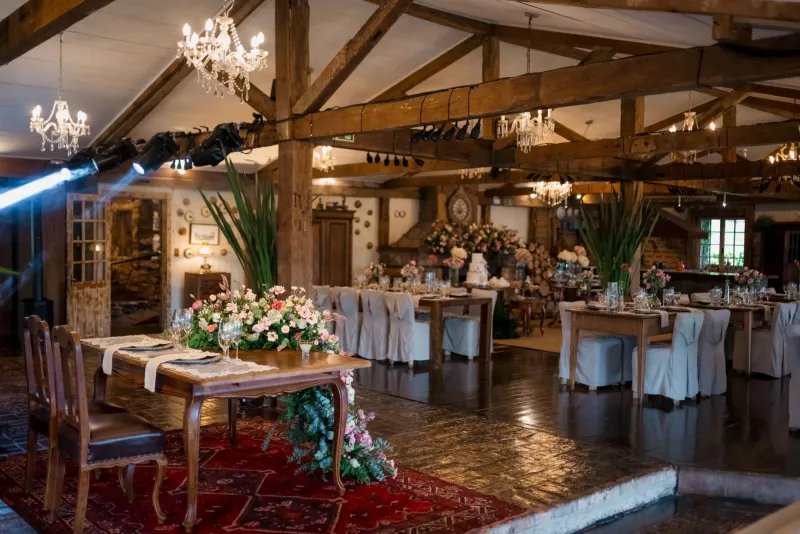
Photo: warm candlelit wedding tables historic stone mill venue festoon lights evening, via cdn-0.totalmotorcycle.com
There is a moment at Priors Mill, usually just after the speeches, when the daylight gives up and the building seems to change its voice. The grain floor goes quiet. The stone turns from honey to shadow. And whatever lighting you have chosen stops being a technical detail and starts being the thing everyone remembers.
For 2026 couples planning a wedding here, the goal is not to flood the mill with light. It is to help it glow. Old buildings like this one have their own texture — pits and patches, beams that lean, lime-washed walls that hold warmth — and the right scheme should flatter all of it without making the place feel like a concert venue with a cake.
Start With the Sunset, Not the Socket
A lighting plan at Priors Mill should begin with the calendar. Billingham sits far enough north that the seasons make a real difference. In late June, you can be gathering for an evening reception while the sky is still pale at half nine. By early October, the light is going by half six, and in December it can feel like dusk has settled before afternoon tea.
That changes everything: when you need candles lit, when festoons should come on, when the uplighters should ease up rather than snap on. Ask your supplier to work backwards from sunset rather than from a fixed clock time. A warm, layered scheme that comes up gradually feels far more natural than a sudden blaze of bulbs at 7pm.
It also helps to think about the ceremony. A winter ceremony at the mill can lean into candlelight and low pools of warmth. A summer ceremony may need almost nothing but what comes through the windows — and a little restraint is its own kind of luxury.
Three Layers, One Warm Feeling
The most forgiving approach is to build your lighting in layers, like a good Sunday lunch.
First, the base layer: discreet uplighting on the stone. This is where old buildings can either shine or suffer. Aim narrow beams at walls and arches rather than blasting the whole room. Warm white — not icy blue, not disco purple — brings out the grain and the mortar without making the mill look like a stage set. If you want colour, keep it to a subtle wash in one corner, or ask for amber and honey tones that sit naturally beside candlelight.
Second, the social layer: festoons and low hanging bulbs. These do the heavy lifting over tables and walkways. They make a room feel inhabited. Keep them high enough that tall guests are not ducking, and use warm bulbs rather than bright white ones. A festoon string that dips gently across the room can be magical; one that cuts the space in half can feel like a marquee that lost its way.
Third, the table layer: candles. Real ones, if your venue and supplier are happy, or good-quality LED alternatives where safety or draughts make flames tricky. Cluster them in odd numbers, vary the heights, and keep them away from anything that could catch. Tea lights in glass, pillar candles on stone ledges, a few lanterns by the doors. The aim is pools of light, not a uniform brightness.
Let Guests Find Their Footing
Atmosphere is lovely until someone trips over a cobble in the dark. Priors Mill has steps, thresholds and corners that deserve a little practical care. A lighting plan should include the unglamorous bits: a soft glow along the path from the car park, markers on steps, a lamp near the cloakroom, enough light around the toilets and the bar that people are not squinting at the card machine.
It is also worth thinking about comfort. Old stone can be cool at night, and bright lights make a room feel colder than it is. Warm, low lighting actually helps a space feel cosier. If you are using candles, keep them out of draughts so they do not gutter. If you are using uplighters, angle them away from seated guests so nobody is staring into a beam.
And do not forget the last dance. The lighting that suits a quiet ceremony may be too dim by 11pm. A simple change of scene — a few warmer spots on the dance floor, festoons slightly brighter, candles still glowing on the tables — keeps the mood without turning the mill into a nightclub. The best schemes are flexible, not fixed.
Power, Access and the Quiet Details
This is the part where a local supplier earns their keep. Priors Mill is a historic building, not a blank event space, and power is not limitless. Ask questions early: where can cables run safely? What is the load? Are cable ramps needed across walkways? Where can a generator sit without spoiling the view or upsetting the neighbours?
Book a site visit in daylight and, if you can, at dusk. Suppliers who know the mill will already understand its quirks — the beams that cast odd shadows, the walls that drink light, the sockets that are not where you would expect. They will also know the load-in times, the access routes and the bits of the building that need protecting.
Use reputable local firms with proper insurance and PAT-tested equipment. If you are using candles, check them with the venue first and keep a fire blanket nearby. None of this is glamorous, but it is the difference between a beautiful evening and a stressful one.
The Glow That Lasts
In the end, lighting Priors Mill is an exercise in generosity. You are not trying to show off the building or hide it. You are trying to let guests see each other, feel warm, and notice the old stone without being told to. Candles, festoons and a little well-aimed uplighting can do that beautifully. So can a supplier who listens when you say you want it to feel like a wedding at a mill, not a wedding at a lighting showroom.
Get the layers right, plan for the sunset, mind the steps, and let the building do the rest. After dark, Priors Mill has a particular kind of magic — but only if you resist the urge to turn all the lights on at once.